Legal Blogs
In-depth articles on legal topics to deepen your understanding.
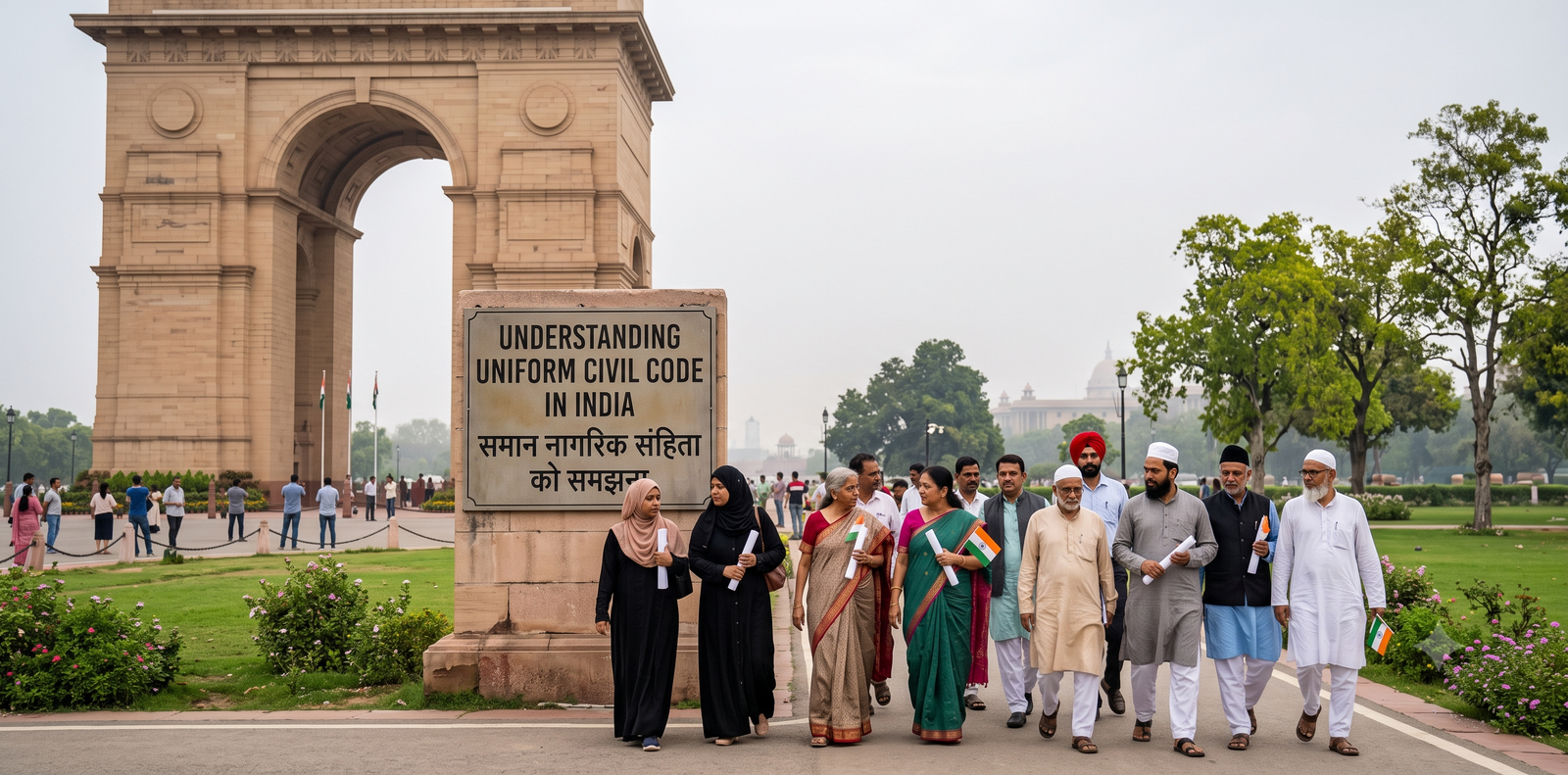
Understanding the Uniform Civil Code in India
Under Article 44, the Uniform Civil Code provides for a uniform civil law in place of faith-based personal laws governing marriage, divorce, succession, and adoption. Supported by landmark judgments such as Shah Bano and Shayara Bano, this code is now ensuring gender justice, legal clarity, and administrative efficiency through state-level legislation.

Article 21: Judicial Expansion of Personal Liberty
Article 21 originated as a narrow protection against unlawful detention. Through landmark judgments such as Maneka Gandhi and Puttaswamy, the Supreme Court expanded its scope into a comprehensive shield, encompassing the rights to human dignity, privacy, health, a clean environment, education, and livelihood.
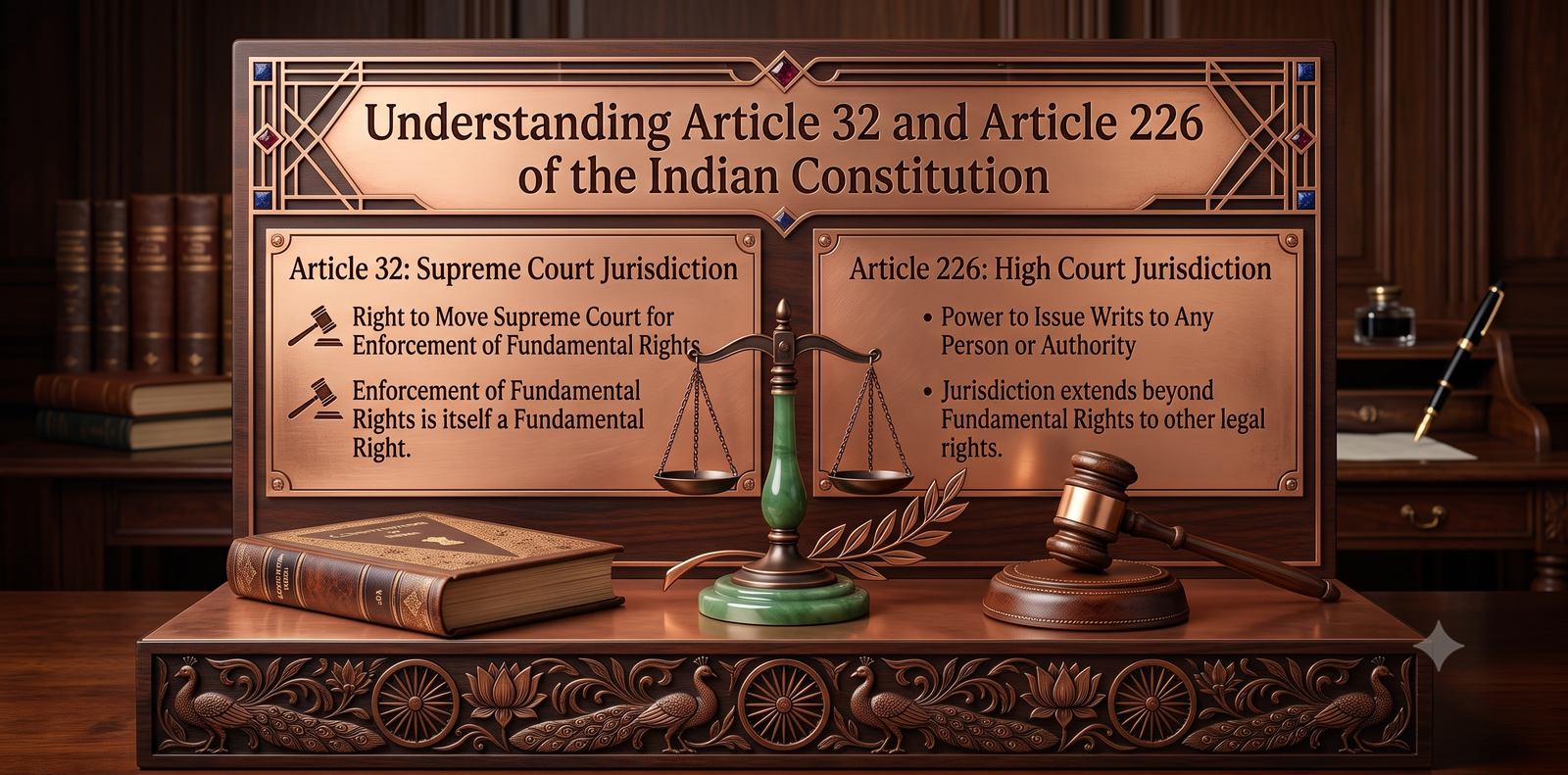
Understanding Article 32 and Article 226 of the Indian Constitution
"Articles 32 and 226 of the Indian Constitution provide constitutional remedies for the protection of fundamental and legal rights. Described by Dr. Ambedkar as the 'heart and soul of the Constitution,' Article 32 confers a fundamental right upon citizens to approach the Supreme Court, whereas Article 226 vests a broader and discretionary writ jurisdiction in the High Courts."
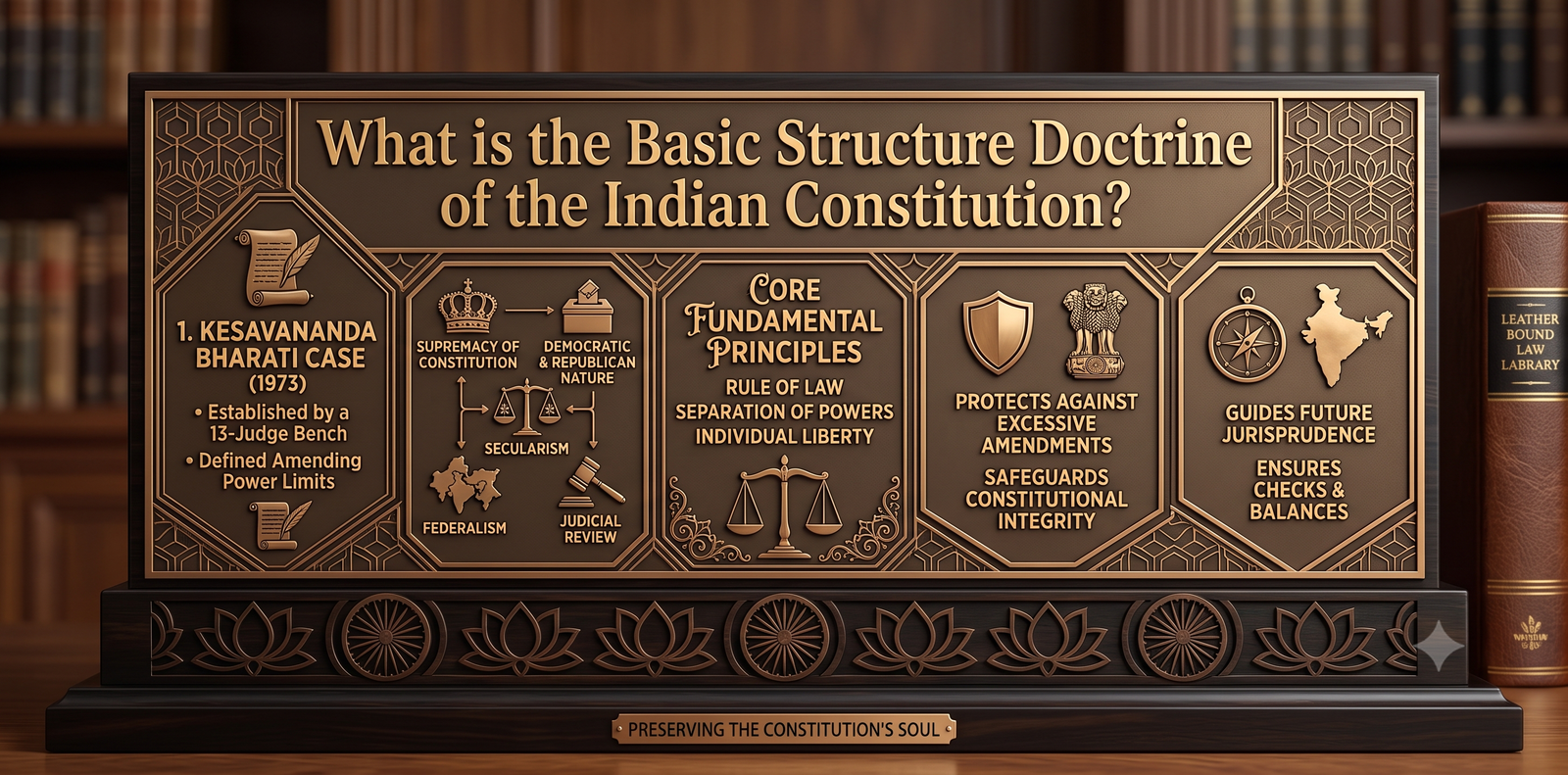
What is the Basic Structure Doctrine of the Indian Constitution?
The 'Basic Structure Doctrine' of the Indian Constitution is a vital legal principle established by the Supreme Court. It holds that while Parliament possesses amending power under Article 368, it cannot alter or destroy the foundational framework, democratic values, secular character, or independence of the judiciary.
Exploring the Preamble of the Indian Constitution
This blog presents an analysis of the Preamble to the Constitution of India. It declares India to be a 'Sovereign, Socialist, Secular, Democratic Republic' and guarantees its citizens justice, liberty, equality, and fraternity. According to the Kesavananda Bharati case, it constitutes an integral part and an unalterable Basic Structure of the Constitution.
Freedom in Practice: A Simple Guide to Article 19 of the Indian Constitution
Article 19 of the Constitution of India guarantees six basic democratic freedoms to its citizens, encompassing speech, assembly, association, movement, residence, and trade. As a cornerstone of civil liberties, these rights are non-absolute and subject to reasonable restrictions in the interest of public order, national security, and sovereignty, continuously expanded through dynamic judicial interpretation.

Know Your Rights: A Guide to Part III of the Constitution
Part III (Articles 12–35) of the Constitution of India guarantees Fundamental Rights to its citizens. These provisions ensure equality, freedom, protection against exploitation, freedom of religion, cultural and educational rights, and constitutional remedies. They restrain arbitrary state action and safeguard individual liberties through judicial enforcement.
Article 13 Explained: Pre-Constitutional Laws, Doctrines, and Judicial Review
Article 13 is the primary defender of Fundamental Rights in the Indian Constitution, conferring the power of Judicial Review upon the judiciary. Under this provision, courts may declare any law, ordinance, or regulation that violates fundamental rights to be null and void (ultra vires). This doctrine ensures the supremacy of the Constitution within the democratic framework.
What Is "The State"? (And Why It Dictates Your Fundamental Rights)
Article 12 defines "the State" to establish who must uphold Fundamental Rights (Articles 14–35). It covers the Union and State governments, legislatures, local bodies, and "Other Authorities." Using the Ajay Hasia (1981) test, courts determine whether bodies like PSUs or banks act as State instrumentalities, ensuring constitutional accountability.